
Understanding Locked-In Accounts: Rules and Tips for LIRAs and LIFs
Understand how Locked-In Retirement Accounts (LIRA) and Life Income Funds (LIF) work in Canada. Learn the key rules, withdrawal limits, and smart tips for managing your retirement money.
10/26/20253 min read

Introduction
If you’ve ever changed jobs and had a company pension, you may have heard of a Locked-In Retirement Account (LIRA) or a Life Income Fund (LIF).
These accounts sound complicated — and they can be — but understanding how they work is essential to making the most of your retirement savings.
Let’s break down what they are, the rules you need to know, and how to manage them wisely.
1. What Is a Locked-In Retirement Account (LIRA)?
A LIRA is like an RRSP, but the money inside comes from a pension plan with a former employer. When you leave a company that offered a defined benefit or defined contribution pension, the commuted value (the amount you’ve earned) can often be transferred into a LIRA.
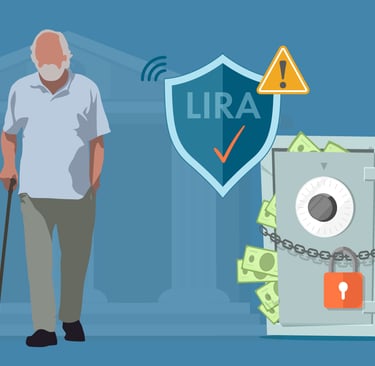
The key difference: the money in a LIRA is “locked-in” — meaning you can’t withdraw it freely before retirement. The purpose is to ensure those funds are used for retirement income, not for other expenses.
2. When Can You Access LIRA Funds?
You typically can’t withdraw directly from a LIRA until you convert it into a LIF (Life Income Fund) or an annuity, usually around age 55 or later (depending on your province’s pension legislation).
At that point, your LIRA turns into an income-producing account that pays you a set amount each year — helping you manage your retirement cash flow while keeping the rest invested.
3. What Is a Life Income Fund (LIF)?
A LIF works similarly to a RRIF (Registered Retirement Income Fund). Once you reach retirement age, you convert your LIRA into a LIF and start making withdrawals.
However, there are two key differences from a regular RRIF:
Minimum and maximum withdrawals apply each year — you can’t withdraw all the money at once.
These limits are set by provincial pension laws, ensuring your savings last throughout retirement.
So, a LIF provides flexibility and control, but still within certain guardrails.
4. Can You Unlock a LIRA or LIF?
Yes — in some specific situations, you can access or “unlock” a portion of the funds before retirement. Rules vary by province, but common reasons include:
Small balance unlock: if your account balance is below a certain amount.
Financial hardship: if you’re facing serious financial difficulties or low income.
Non-residency: if you’ve permanently left Canada.
Shortened life expectancy: with medical proof.
Each province has its own process and limits, so always check with your financial institution or advisor before applying.
5. Tips for Managing Locked-In Accounts
Managing a LIRA or LIF takes strategy. Here are some tips to help you get the most from your money:
Know your province’s rules. Pension legislation varies — what’s allowed in Ontario may differ in British Columbia or Alberta.
Plan your conversions. Don’t rush to convert your LIRA into a LIF before you actually need income. Keeping it invested longer allows more time for tax-sheltered growth.
Balance withdrawals and taxes. LIF withdrawals count as taxable income, so coordinate with other sources (RRSPs, CPP, etc.) to avoid moving into a higher tax bracket.
Diversify your investments. Even inside a LIRA or LIF, you can invest in mutual funds, ETFs, or GICs — depending on your risk tolerance.
Work with an advisor. They can help design a withdrawal plan that aligns with your lifestyle, tax situation, and long-term goals.
6. Common Mistakes to Avoid
Many Canadians make the same few mistakes with locked-in accounts:
Thinking they can withdraw anytime — they can’t.
Forgetting to update beneficiaries after job changes.
Converting too early and missing out on potential growth.
Ignoring tax implications when combining LIF income with other sources.
Being proactive and informed helps you keep more of your money working for you.
Conclusion
LIRAs and LIFs are designed to protect your pension savings and provide stable, lifelong income. While the rules can seem restrictive, they exist to ensure your retirement funds last as long as you do.
With careful planning — and the right advice — these accounts can play a vital role in a secure and flexible retirement strategy.
Not sure what to do with your old pension or locked-in account?
💬 Contact TiKi Wealth today — we’ll help you understand your options, manage your withdrawals smartly, and make your retirement money work harder for you.
Insurance
© 2025 TiKi Wealth. All rights reserved. In partnership with Experior Financial Group Inc. Privacy Policy Terms of Service Disclaimer
Investment
Other


Subscribe to Our Newsletter
Stay updated with the latest financial news and tips.